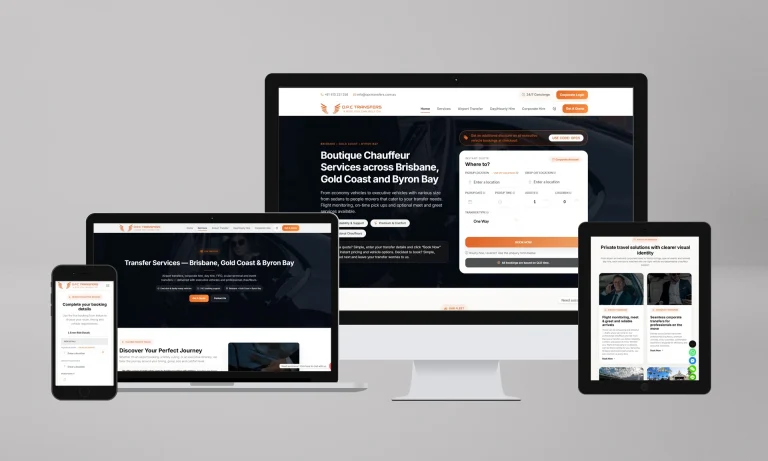
Route intent
Support airport, regional and attraction transfers with dedicated information instead of one generic service page.

Case study / Booking website
A WordPress transfer website connecting route-specific service content, fleet choice and a multi-step reservation flow for travellers booking on the go.
01 / The brief
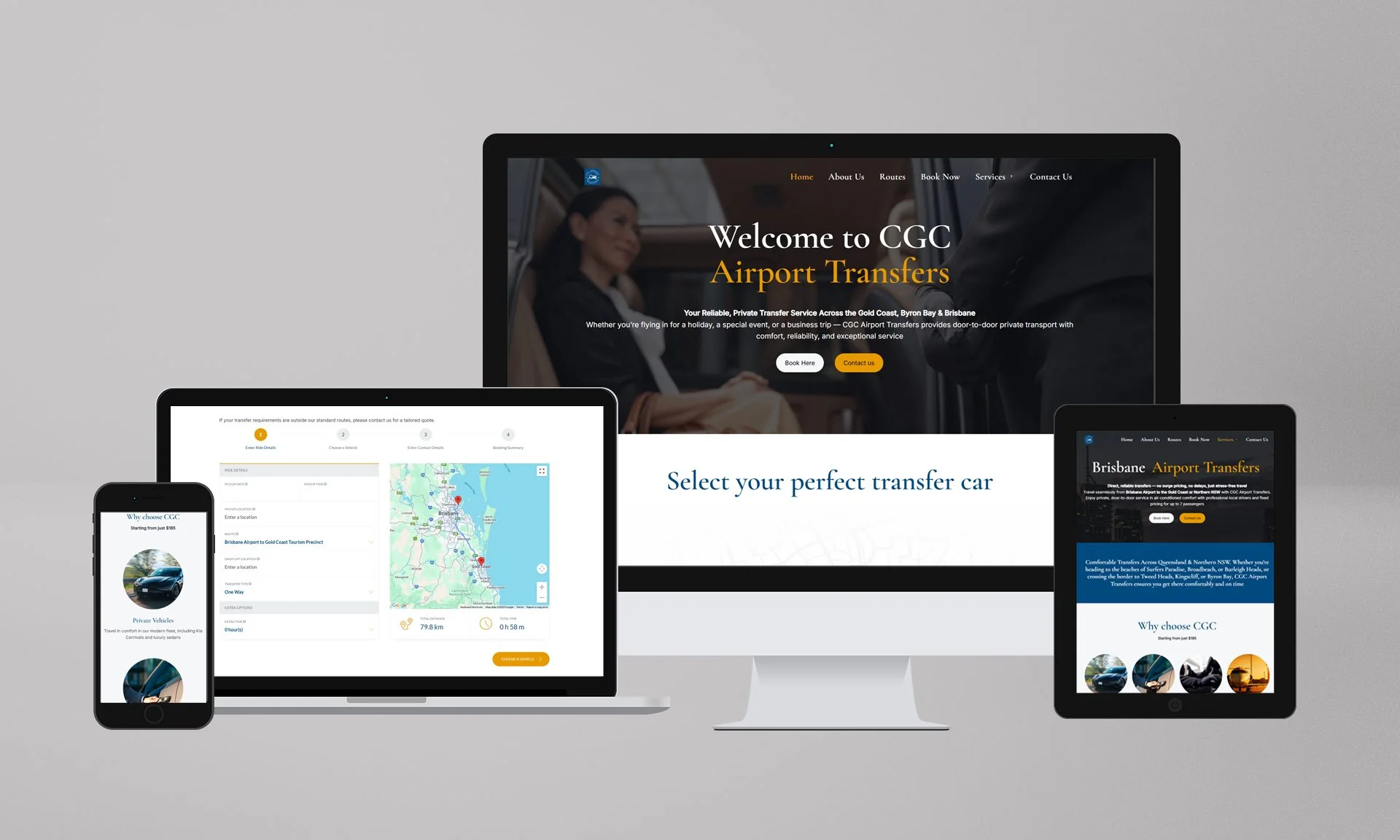
CGC Airport Transfers operates across the Gold Coast, Brisbane, Byron Bay and surrounding routes. Prysma DMKT developed the website in collaboration with DMKT Performance, combining the service content with an online transfer booking system.
The project scope covered the WordPress build, responsive Bootstrap implementation, booking interaction, image optimisation and SEO-ready route pages.
02 / The challenge
A transfer customer may arrive with a route, date and passenger count already in mind. The website had to convert that intent into the correct vehicle and booking details while remaining easy to use on a phone.
At the same time, service pages needed enough route and trust information to support organic discovery and reassure users before payment.
Support airport, regional and attraction transfers with dedicated information instead of one generic service page.
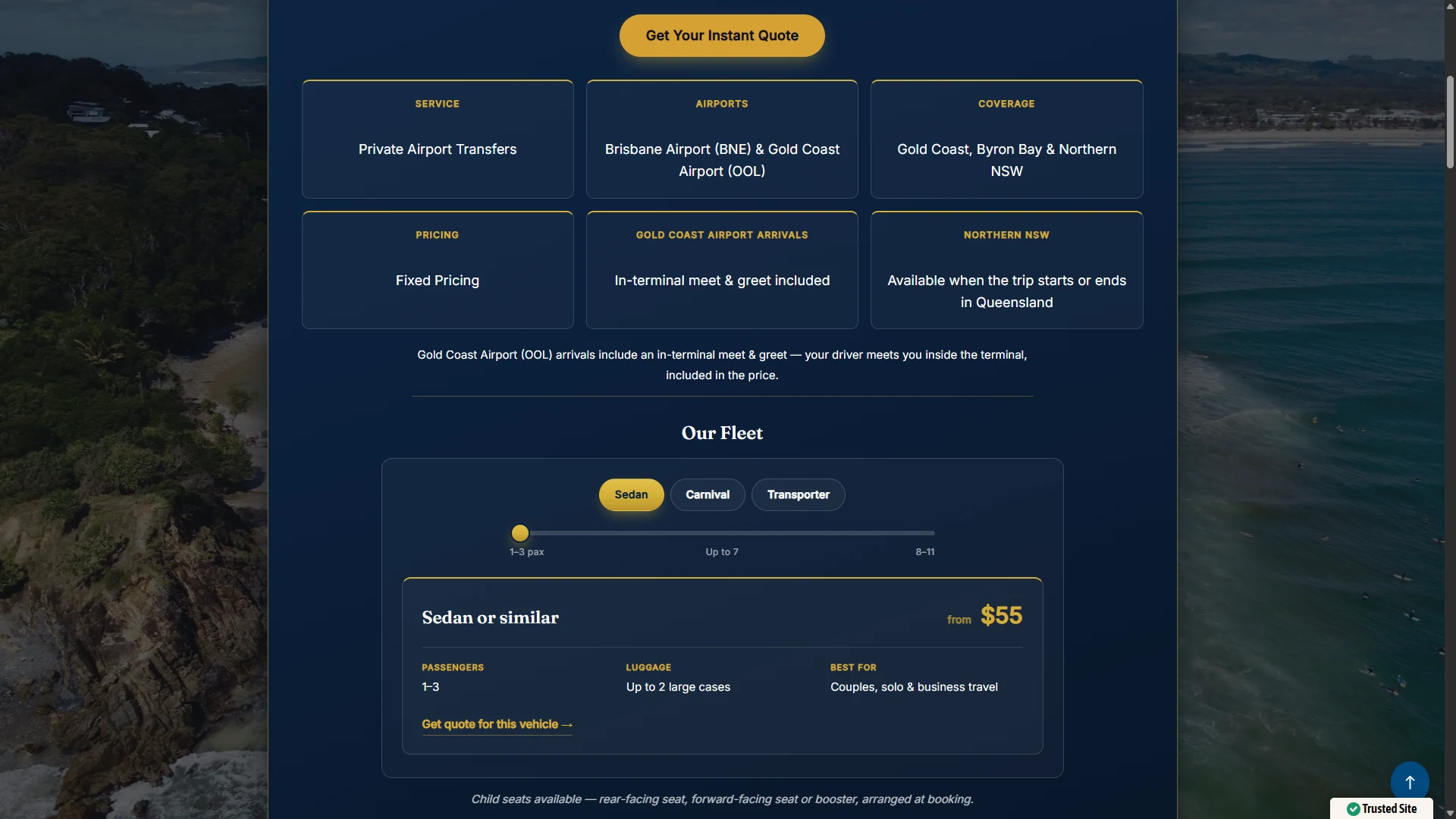
Make passenger capacity, luggage and vehicle choice understandable inside the booking process.
Keep forms, pricing context and calls to action usable for travellers booking from smaller screens.
03 / The experience
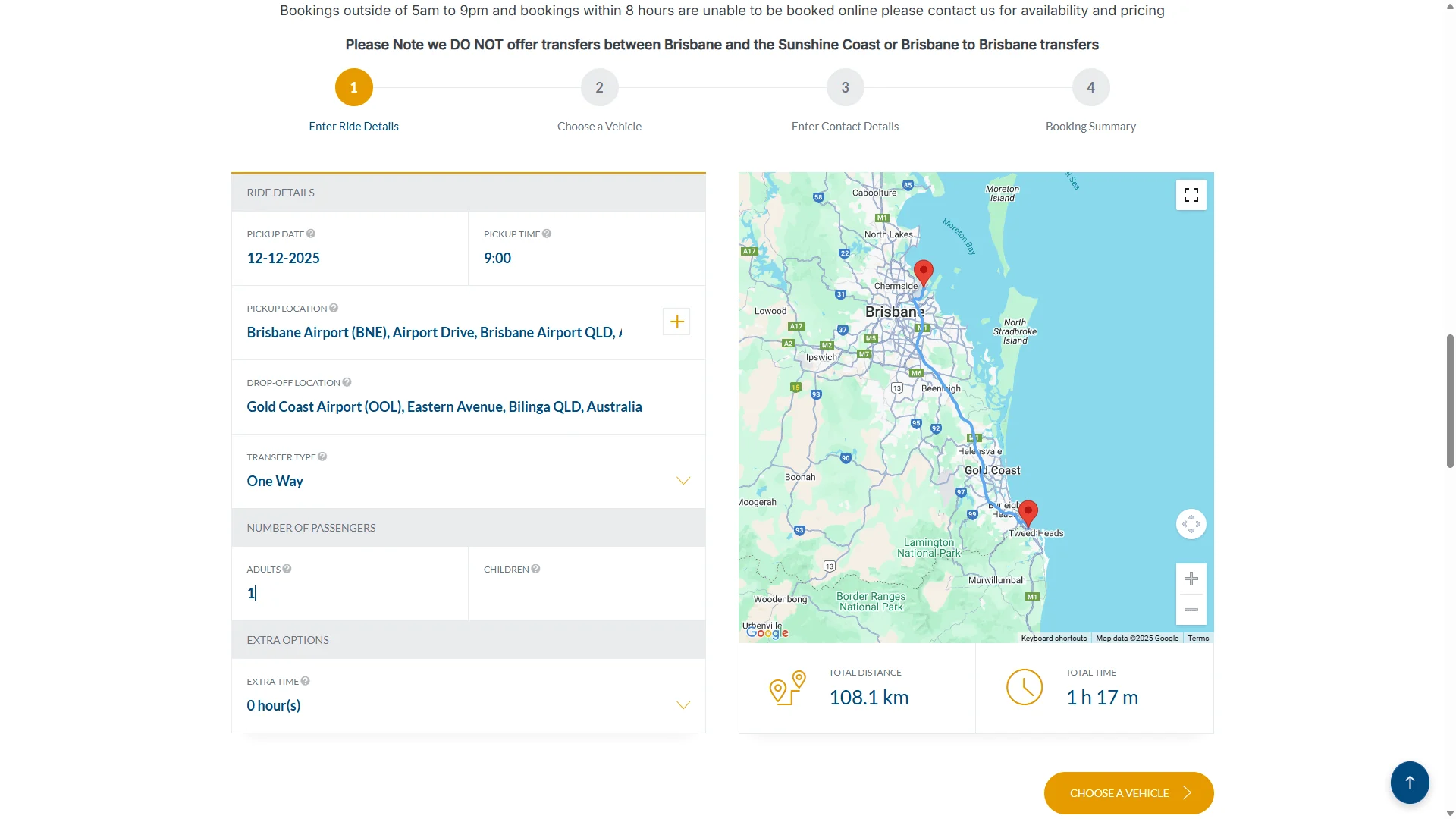
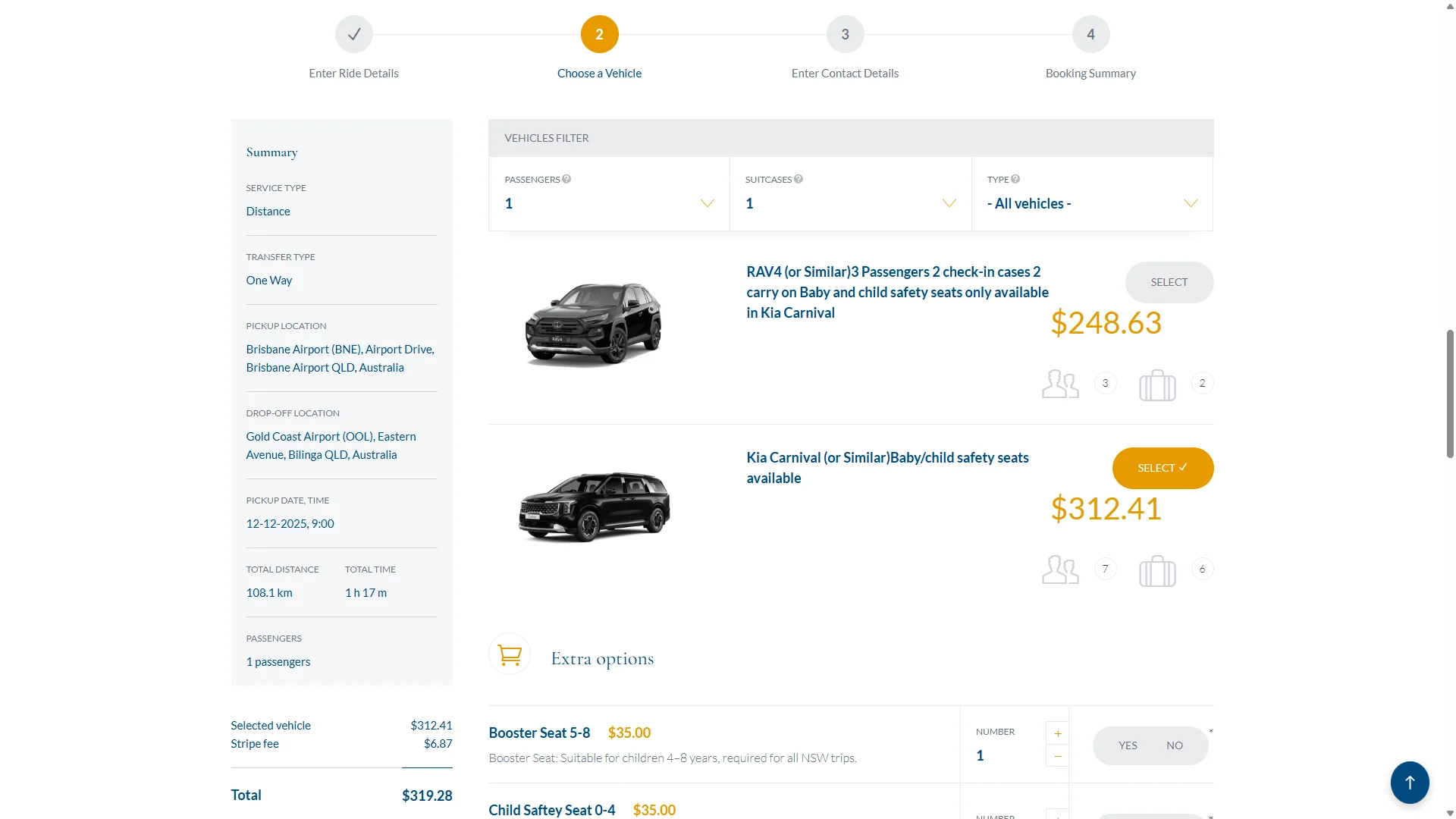
The documented flow breaks the reservation into manageable decisions rather than exposing every field at once.
Pickup, destination, date, time and passenger details establish the transfer request.
Available vehicle options help customers choose an appropriate fit for passengers and luggage.
Contact details, a booking summary and the documented PayPal/card path complete the reservation flow.
04 / The implementation
The site uses WordPress with a Bootstrap frontend and reusable block patterns for hero sections, service grids, testimonials, vehicle listings and FAQs.
Dedicated route pages were structured for high-intent searches such as Gold Coast Airport, Brisbane Airport, Byron Bay and theme-park transfers, while optimisation work covered responsive behaviour, imagery, metadata and technical performance.
05 / Evidence
The booking flow is only one part of the project. Supporting service and vehicle information helps users make the decisions needed to complete it.
06 / Results & delivery
CGC received a functional booking-oriented website rather than a brochure with a form added at the end. Service pages, vehicle context, FAQs and route content feed naturally into the reservation journey.
The original case describes faster booking and improved SEO readiness qualitatively; it does not preserve a measurement dataset suitable for a numeric results panel.
Key takeaway
For transport websites, the booking sequence should influence the page architecture from the beginning. Route content attracts and reassures the visitor; the interface then collects only the information needed for the next booking decision.
Share the current website, the constraint and what needs to change.