Choose with confidence
Make product differences, colour and material options easy to compare.

Ecommerce growth
Connect product information, configuration, storefront behaviour and measurement. Prioritise the friction that affects the buying journey before adding more acquisition.
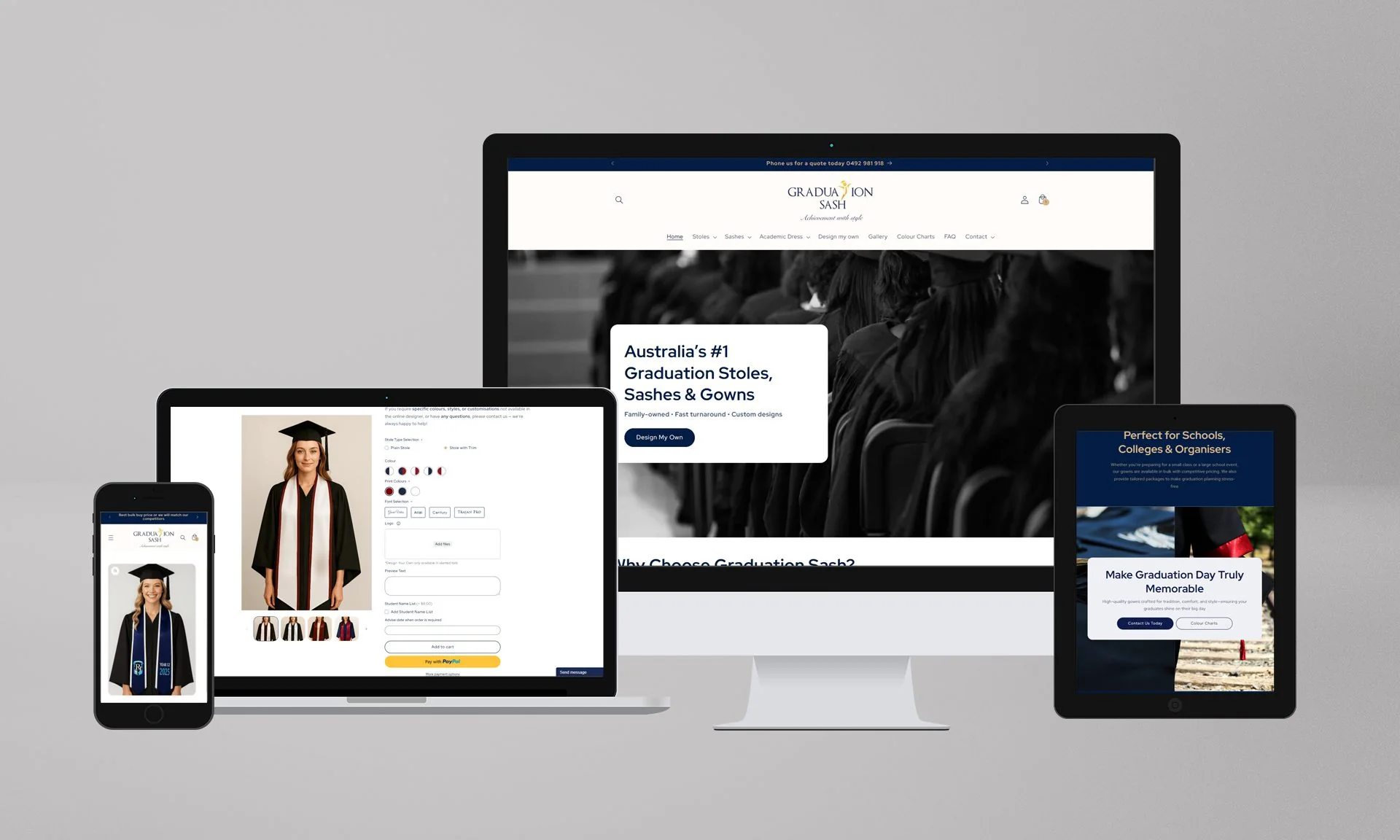
Buying experience

Make product differences, colour and material options easy to compare.
Keep text, uploads and required selections connected to the product preview.
Carry selections into the cart and verify required details before checkout.
Scope and delivery
Review how shoppers discover a product, compare options and understand what they are ordering. Product information, variations, delivery conditions and the next action need to work together. Begin with an actual purchase journey and identify the point that is confusing or difficult. The right scope may be a clearer product template, a better category structure or an interaction that makes customisation understandable.
List the information shared by products and the fields that vary by category. Agree how options, unavailable combinations and price changes will be communicated. Review image quality at the actual display size and provide enough context for each choice. Connect the store scope with catalogue ownership, payment and shipping requirements so design decisions can be implemented consistently.
Review representative products and test the complete order journey, including errors and mobile use. Keep product-view activity separate from confirmed purchases in the measurement plan. Deliver reusable product structures, content guidance and a prioritised review list. Once the experience is consistent, connect search and paid acquisition to the relevant categories and products, then assess performance against the agreed commercial definitions.
Implementation scope
Review product complexity and the current buying path.
Define information hierarchy and interaction states.
Build sections and product behaviour within platform constraints.
Test devices, product variants and purchase events.
FAQ
No. Sales also depend on demand, pricing, product fit, availability and acquisition. We define the implementation and the actions to validate.
No. Platform choice follows the project requirements. Existing platform capabilities and migration dependencies are reviewed first.
Related capabilities
Next step
Share the current website, the constraint and what needs to change.