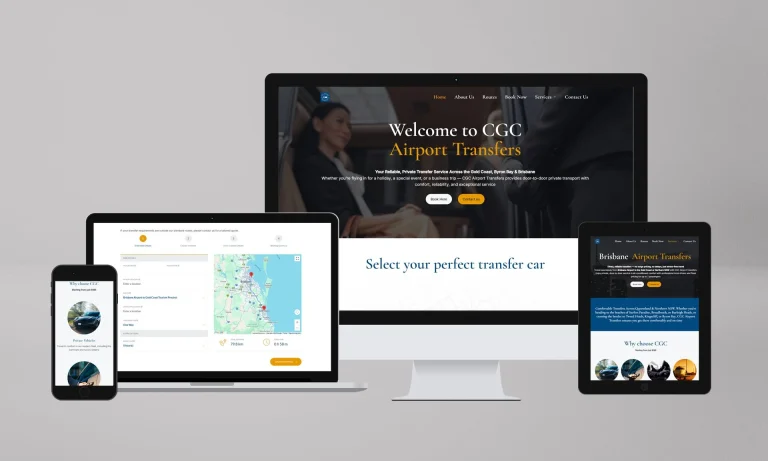
Multiple intents
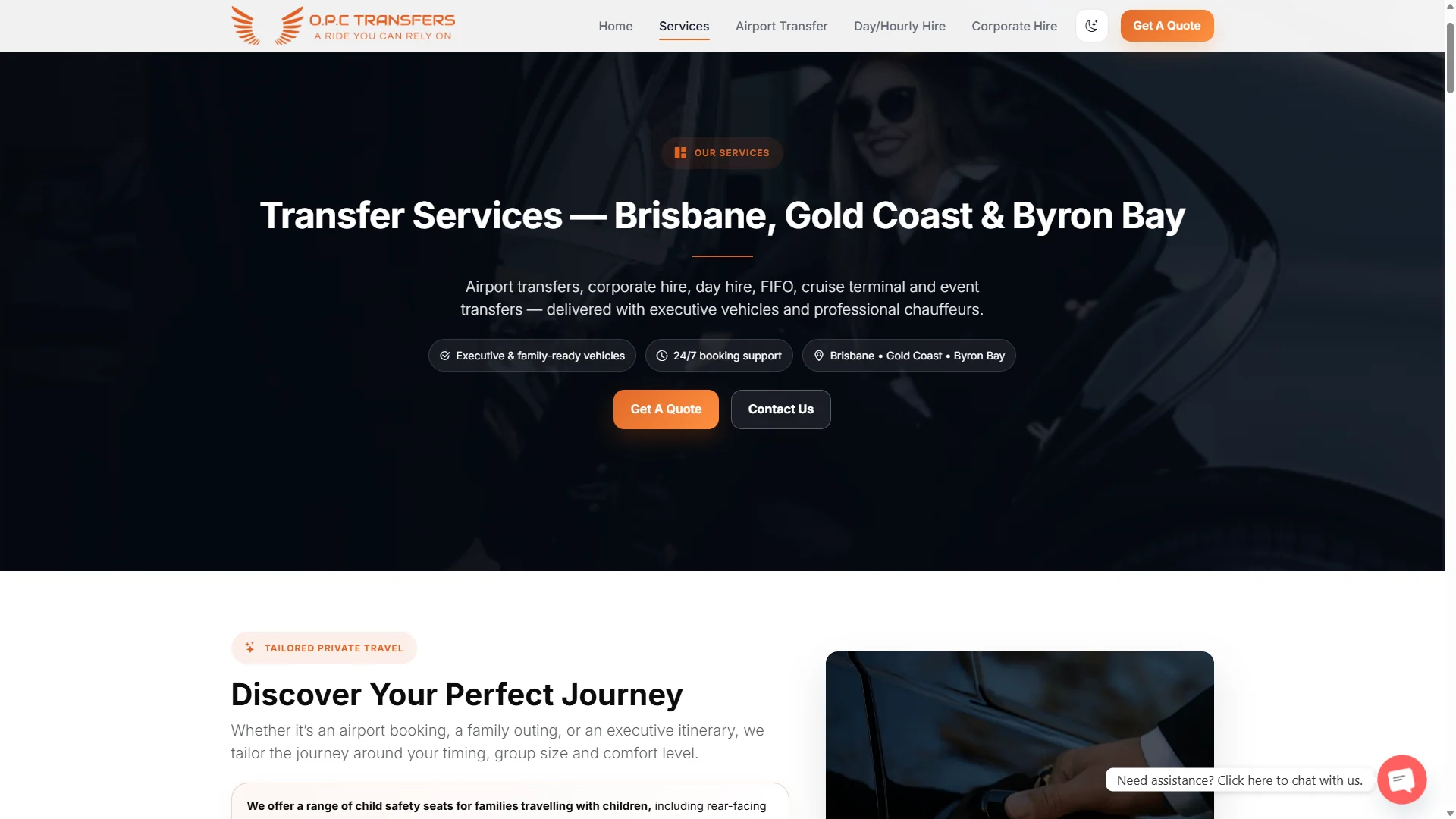
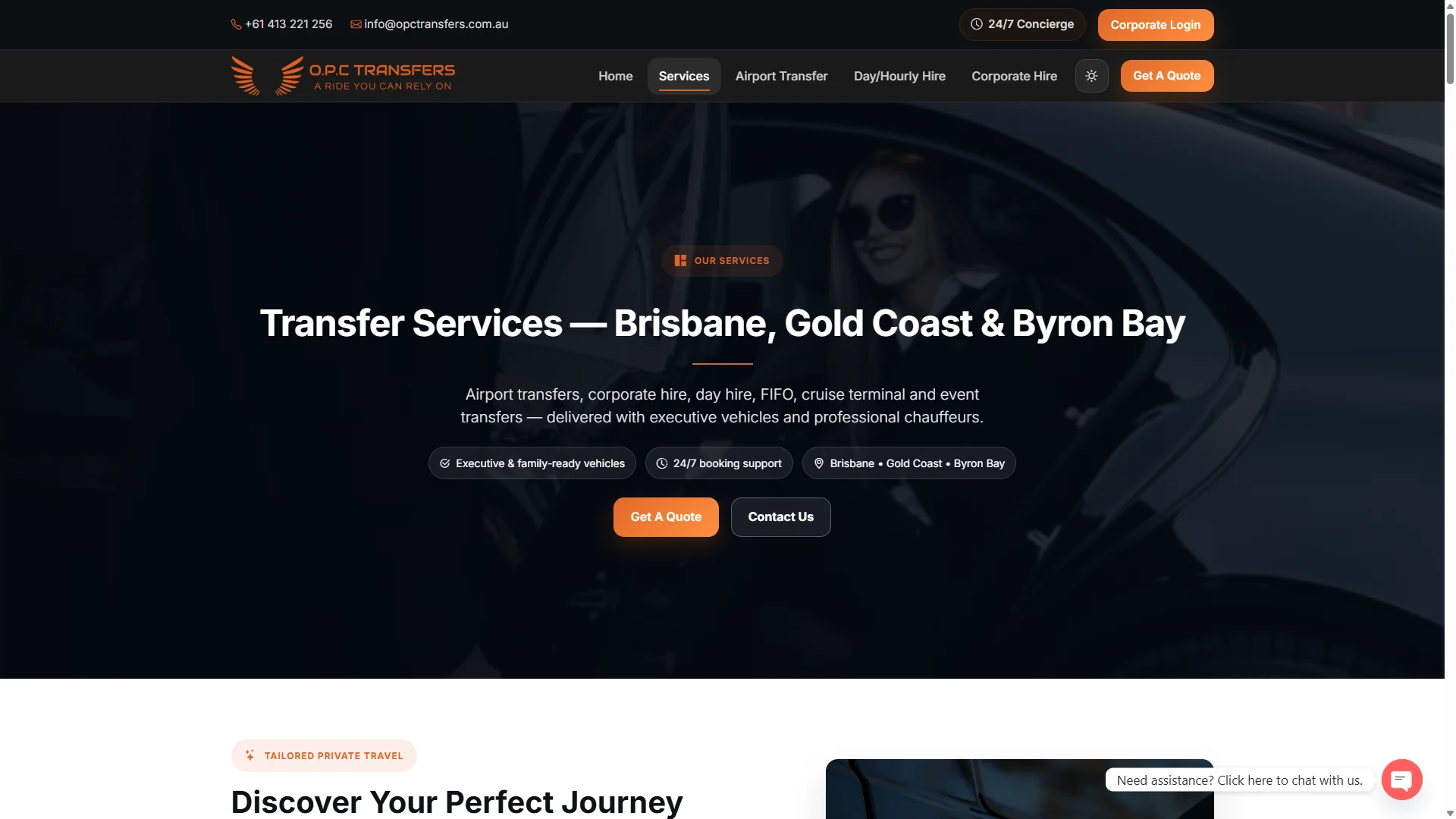
Airport transfers, hourly hire and corporate travel require distinct decision paths within one brand experience.

Case study / Booking website
A custom WordPress platform connecting private transfers, chauffeur hire and corporate travel with a structured booking experience.
01 / The brief
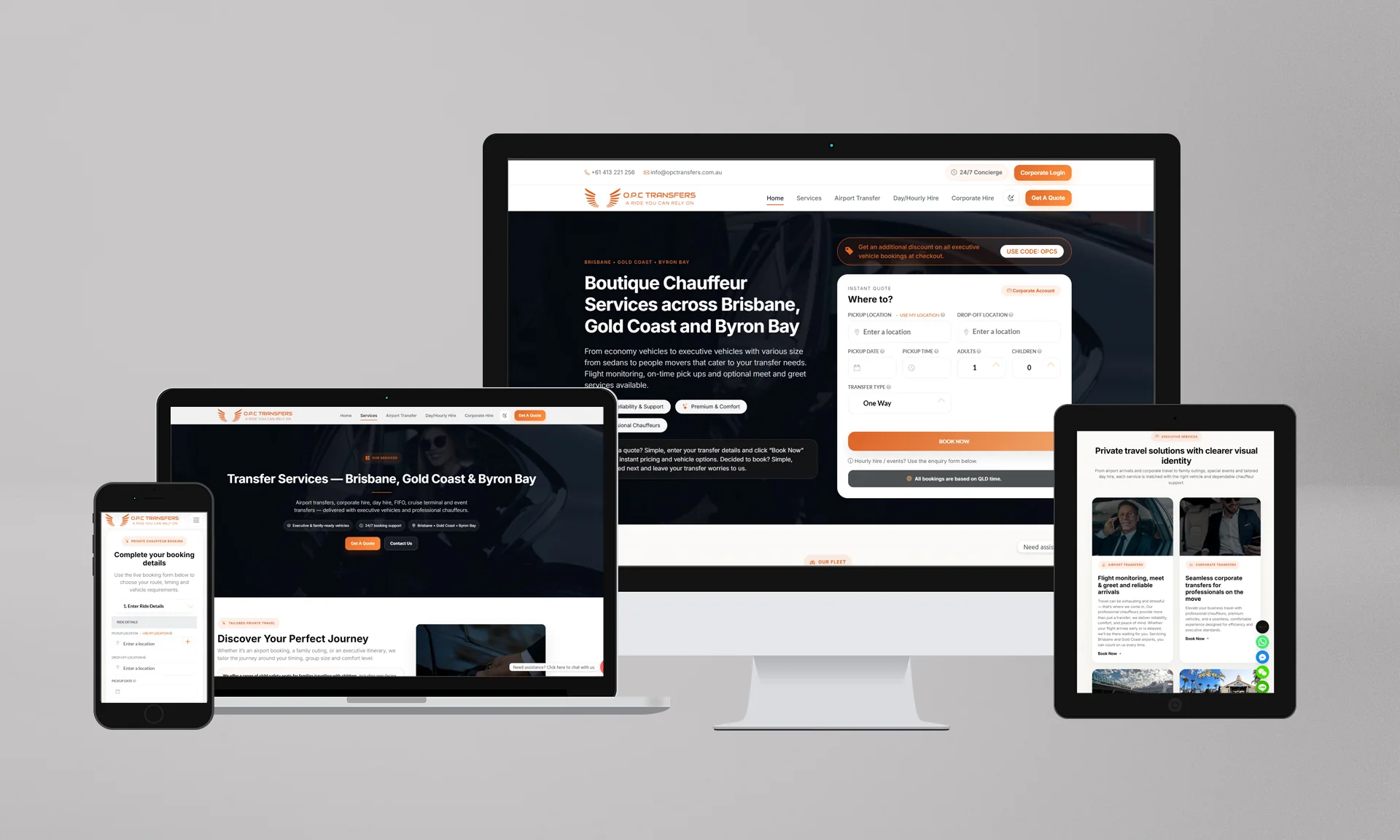
OPC Transfers provides private chauffeur and transfer services across Brisbane, the Gold Coast, Byron Bay and surrounding areas. Customers may be booking a straightforward airport transfer, arranging flexible daily or hourly hire, or organising corporate travel.
Prysma DMKT, in partnership with DMKT Performance, developed a custom WordPress platform that brings those service paths into one consistent digital experience while giving the business a reusable structure for future campaigns and services.
02 / The challenge
A simple airport transfer requires different information from a full-day itinerary or an ongoing corporate account, while every journey still needs to communicate the same expectations around reliability, safety and premium service.
The website therefore had to make booking intent immediately clear, accommodate practical requirements such as luggage and child seats, support higher-value enquiries and remain fast despite forms, imagery, reviews and booking functionality.
Airport transfers, hourly hire and corporate travel require distinct decision paths within one brand experience.
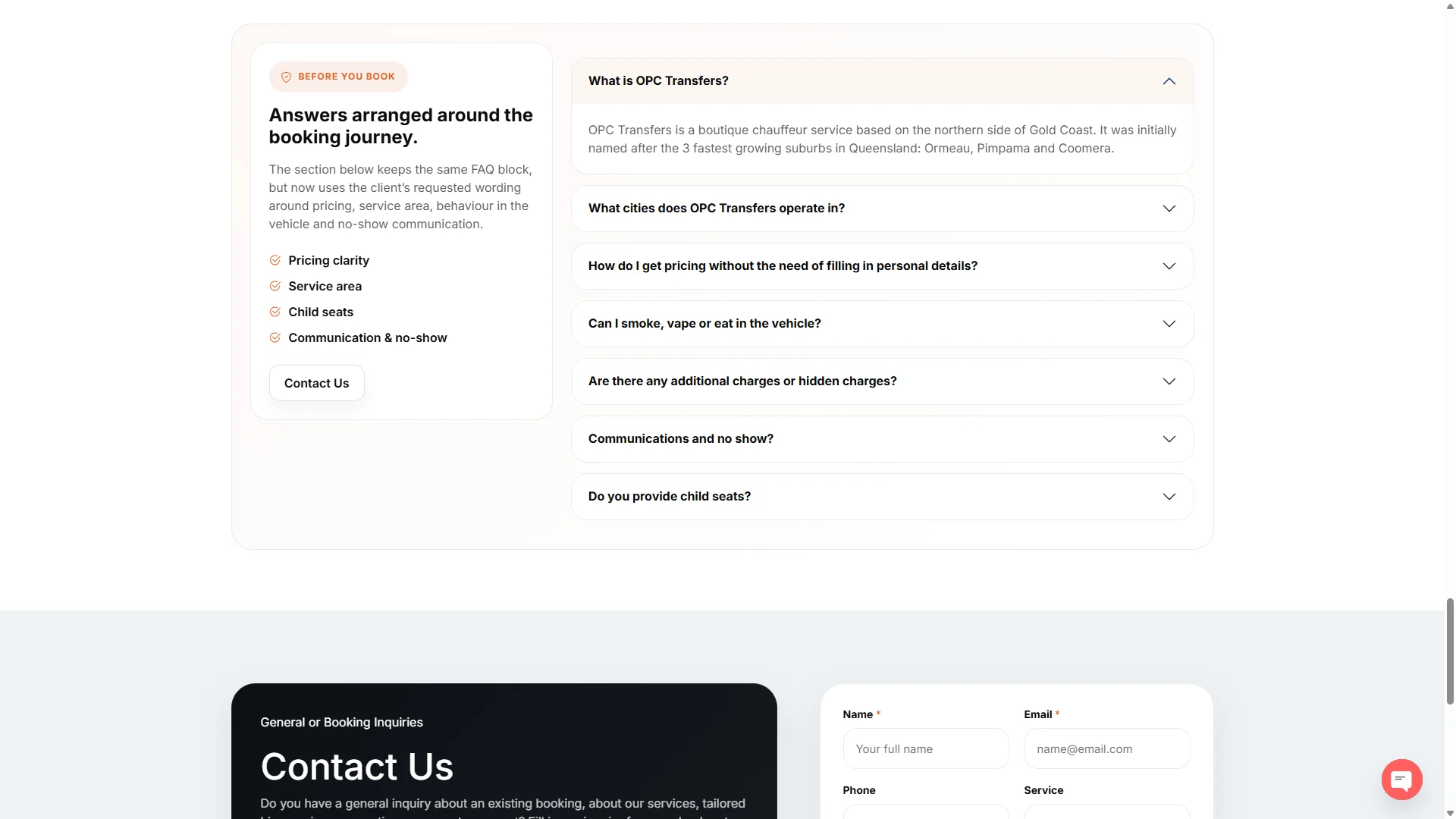
Pricing context, luggage, child seats, delays and communication need to be answered at the right moment.
Real booking logic had to remain understandable instead of turning the interface into a dense form.
03 / The experience
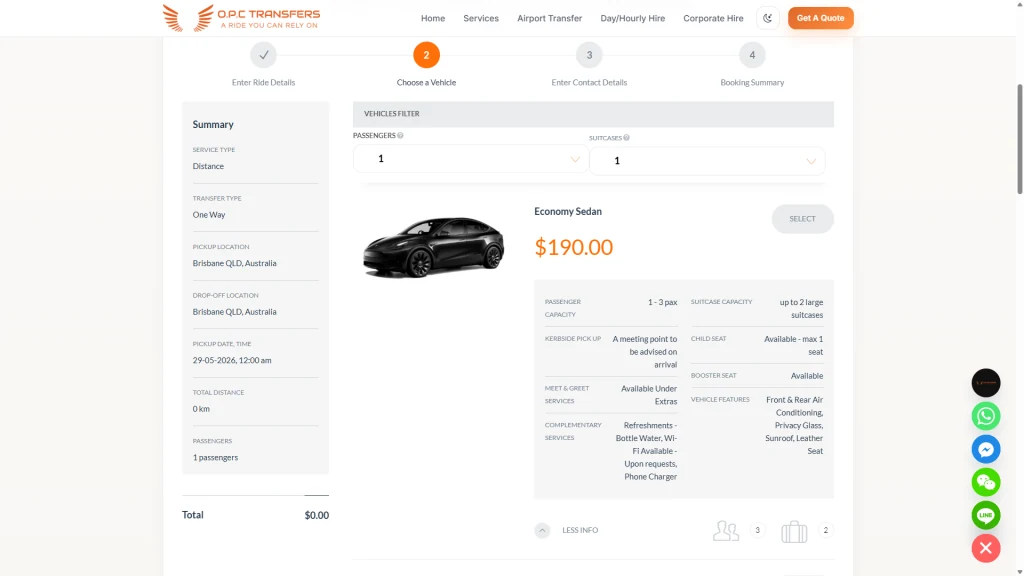
The flow asks for information in the order needed to match the journey with an appropriate vehicle and booking context.
Pickup and drop-off, date, time, passengers and return options establish the trip.
Passenger and suitcase filters support selection; child seats and meet-and-greet extras capture practical needs.
Contact details and a booking summary lead into the payment steps described in the original project.
The desktop recording uses pickup and drop-off fields, displays the calculated route and continues to vehicle options. It stops before contact details and payment; prices belong to the recording.
04 / The implementation
The site combines WordPress with a Bootstrap-based frontend and a library of custom blocks and reusable patterns. This gives OPC Transfers a distinctive interface without locking future service pages, fleet cards, FAQs or campaign content into one-off layouts.
The architecture separates airport transfers, daily and hourly hire and corporate travel while maintaining a consistent route into booking or enquiry. The current live site continues to expose distance-based and hourly quote paths alongside fleet information.
05 / Evidence
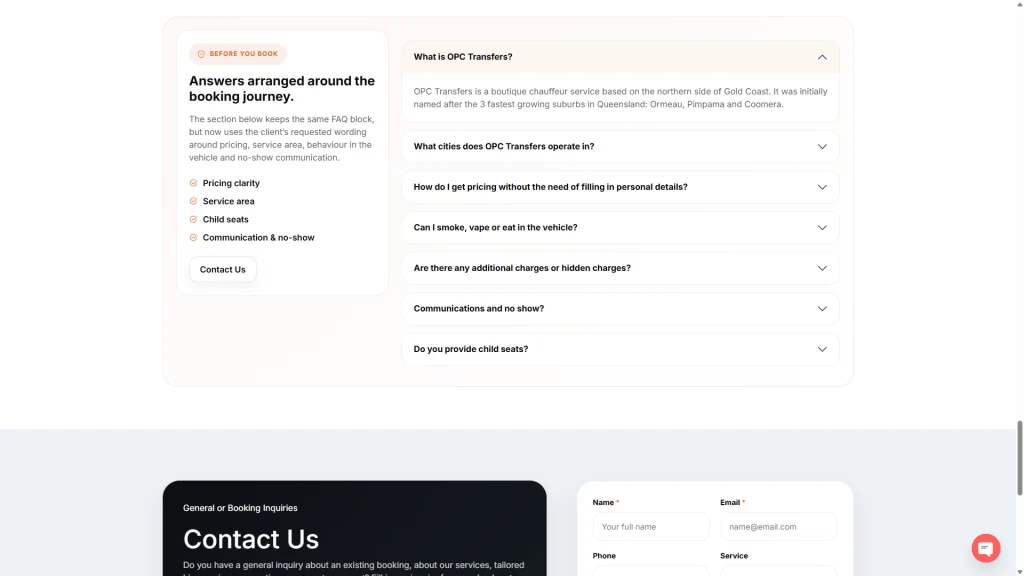
Private transport customers need reassurance about more than the vehicle itself. Flight delays, luggage capacity, child seats, communication and booking policies can all affect the decision to proceed.
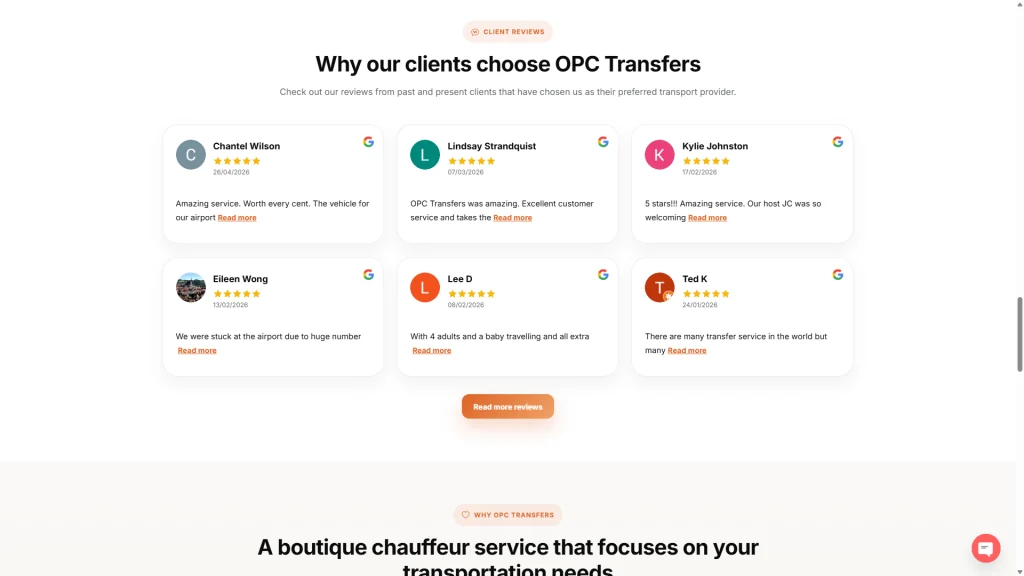
06 / Results & delivery
The delivered website moves OPC Transfers beyond a brochure-style presence. Booking functionality, differentiated service journeys, corporate travel paths, reviews, FAQs and reusable content structures operate within the same platform.
The original case also preserves specific Core Web Vitals values, so they can be shown as documented technical evidence when clearly labelled with their historical context.
Key takeaway
A service website becomes more valuable when the booking model shapes the information architecture from the beginning. For OPC Transfers, service content and booking logic operate as one system rather than separate layers.
Share the current website, the constraint and what needs to change.