01
Healthcare clarity
Procedure information and trust signals needed to be easier to navigate, especially for visitors already arriving with uncertainty.

Case study / Healthcare website
A clean WordPress rebuild that moved a recovered legacy site into a faster, maintainable system for patient information, referral pathways and appointment enquiries.
01 / The brief
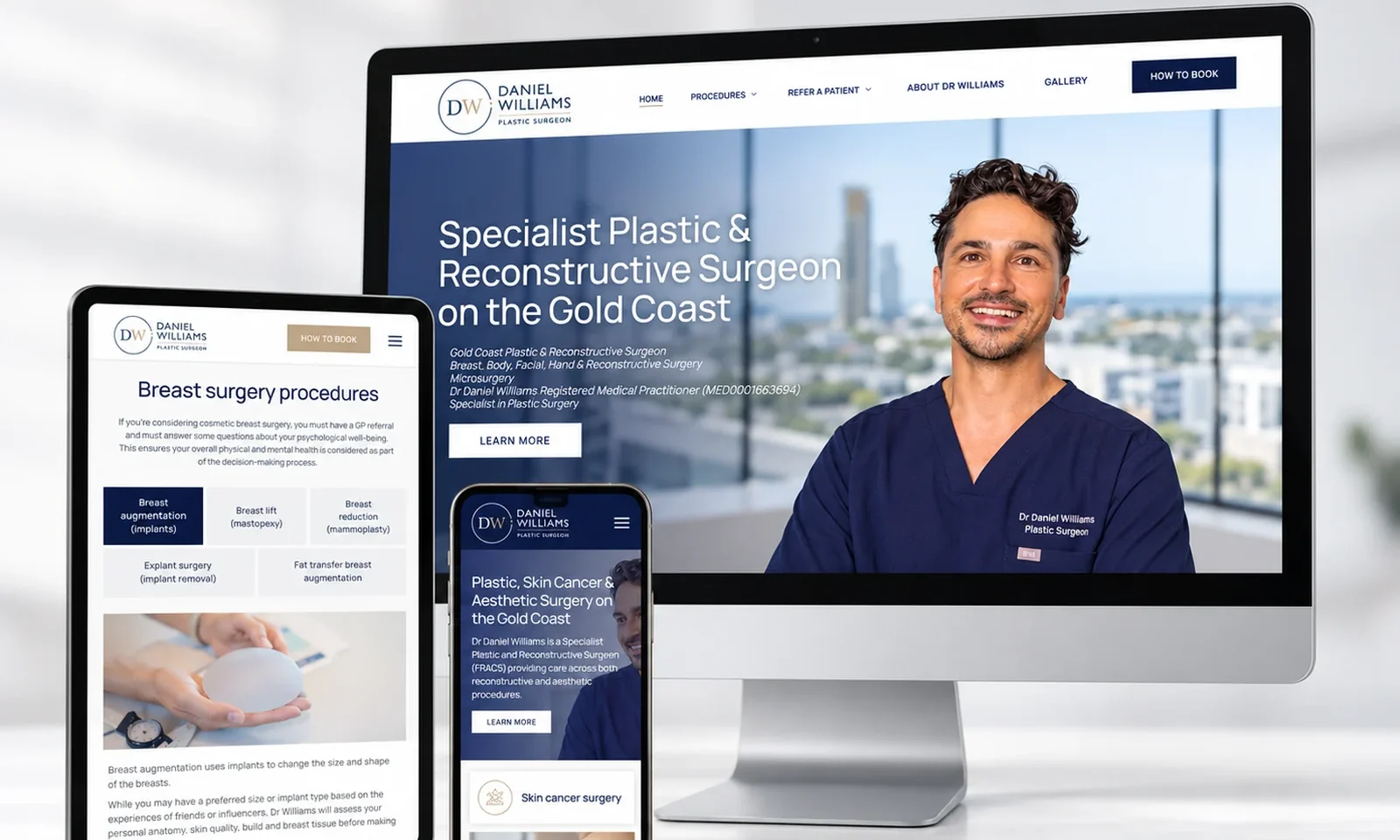
Dr Daniel Williams required a full WordPress rebuild after a legacy installation had been recovered and cleaned. The objective was not just to make the site visible again, but to turn it into a clearer, more reliable patient resource for procedure research, referral context and appointment intent.
Prysma DMKT rebuilt the website as a maintainable Gutenberg-based system, preserving the approved design direction while improving structure, responsiveness, editing, media handling and the practical paths patients and referrers use to take the next step.
02 / The challenge
The site needed to support very different visitor intents: patients researching procedures, referrers looking for a pathway, and visitors trying to move from uncertainty to contact. The content also had to remain easy for the practice to maintain without relying on a fragile builder setup.
That meant the rebuild had to address both interface clarity and operational reliability: page structure, navigation, forms, email delivery, responsive behaviour, media handling, performance and continuity from the legacy website.
01
Procedure information and trust signals needed to be easier to navigate, especially for visitors already arriving with uncertainty.
02
The website had to move from a recovered state into a dependable WordPress system with editable content and reliable enquiry routes.
03
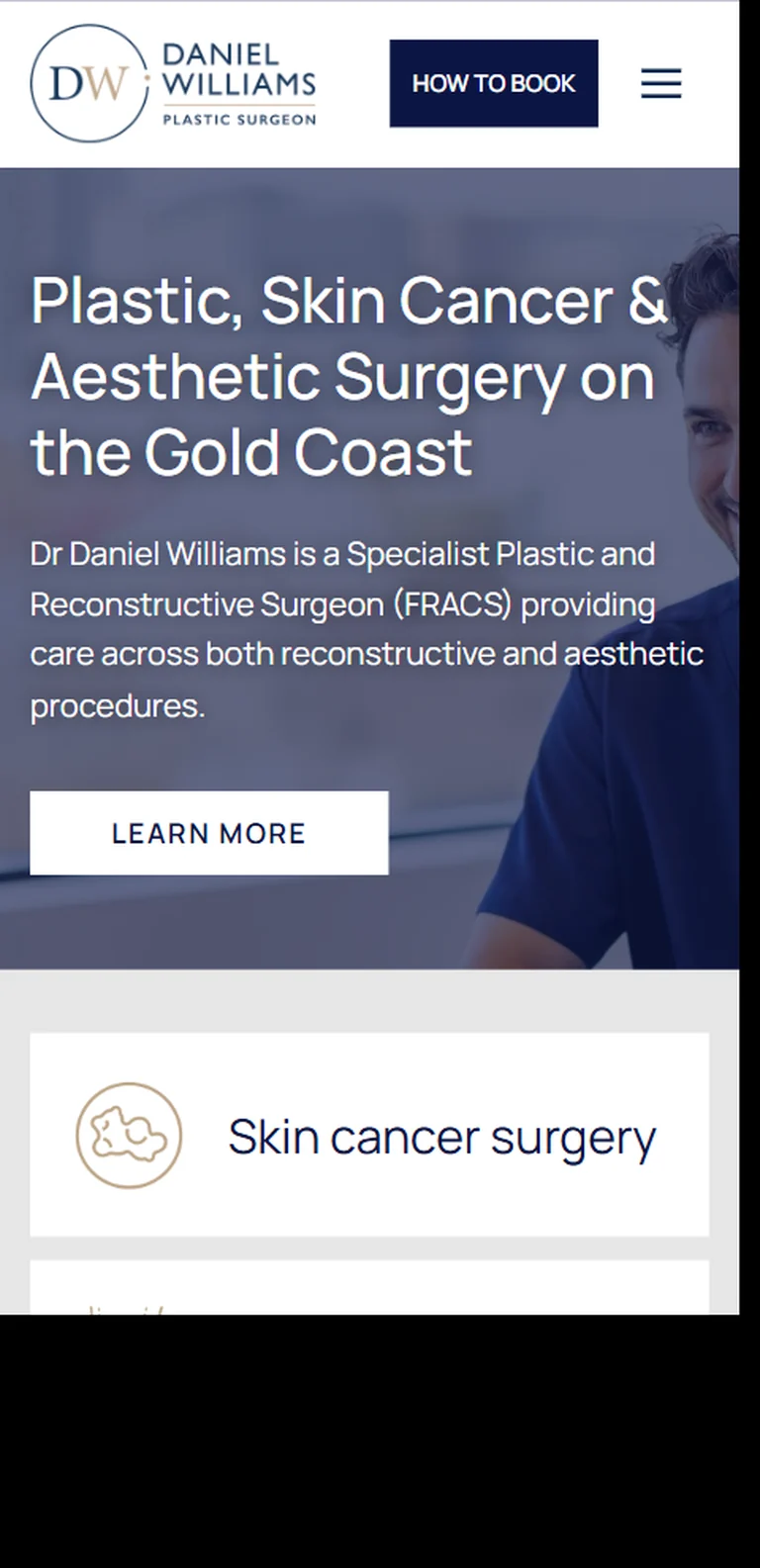
Desktop, tablet and mobile views had to keep the same hierarchy, brand quality and next-step clarity across the site.
03 / The experience
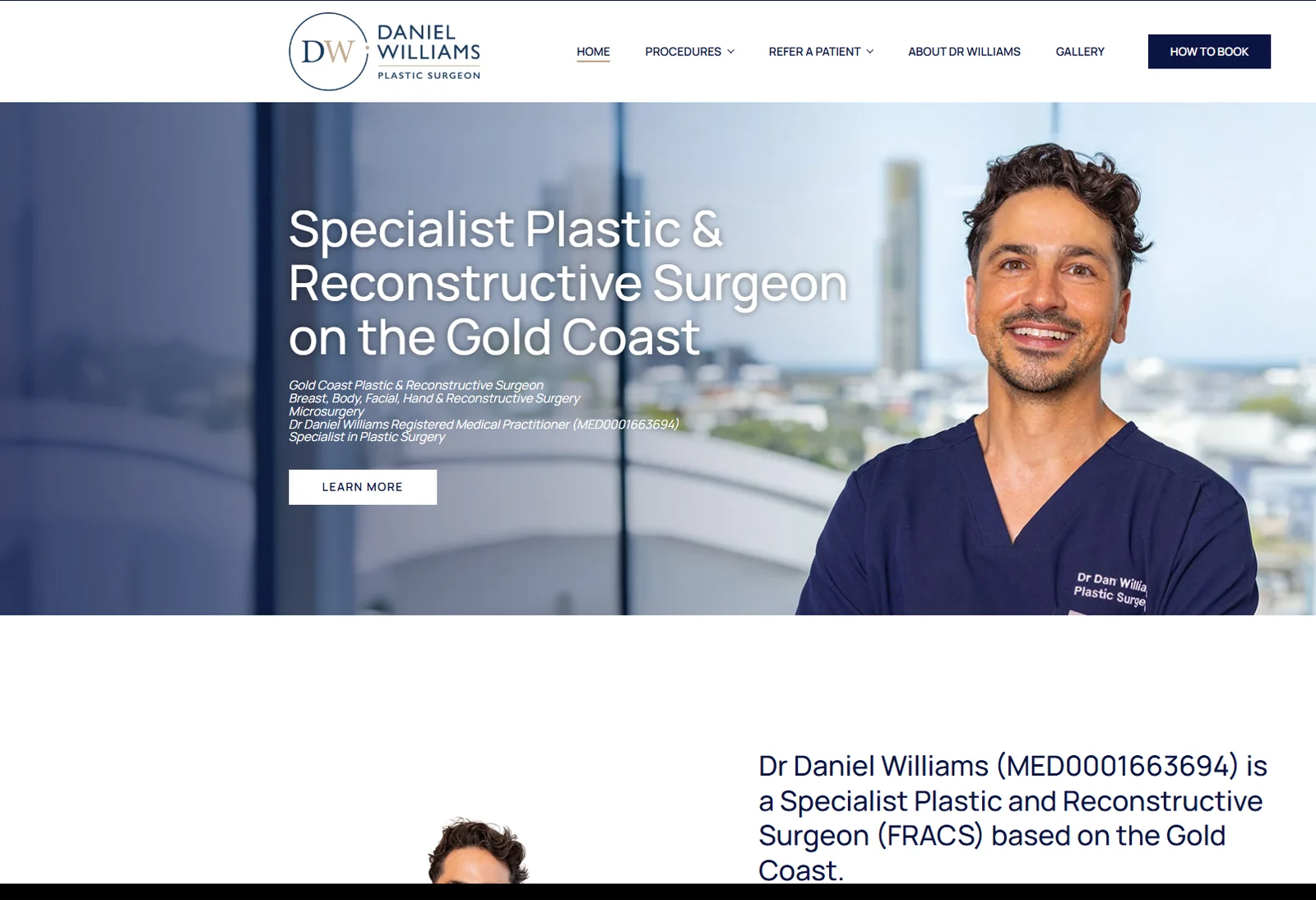
The website was structured so the first screens explain who the practice is, what types of procedures are covered and where to go next without overwhelming the visitor.
01
Branding, credentials, imagery and content hierarchy work together to communicate professionalism from the start.
02
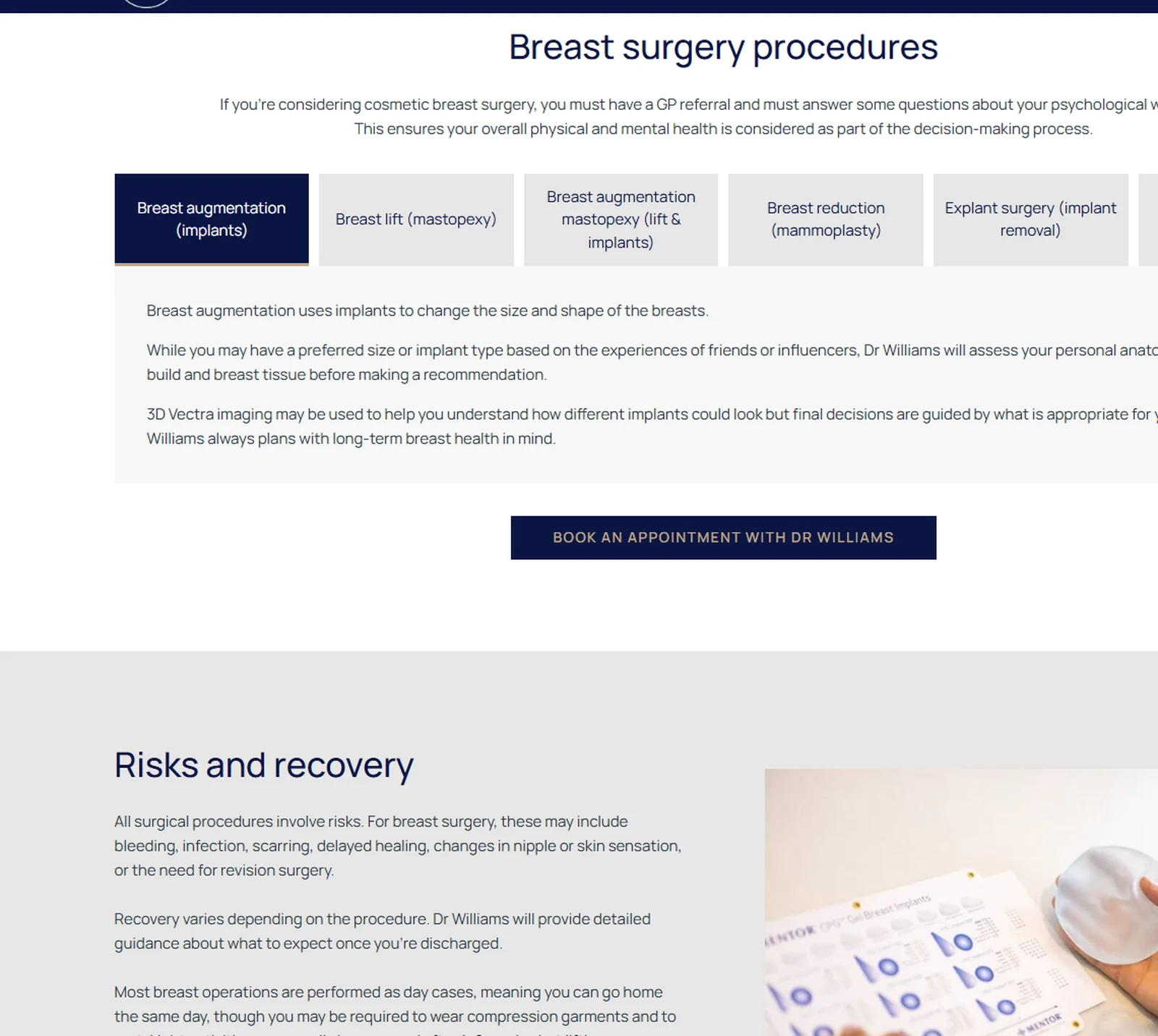
Procedure categories and detail pages help visitors find relevant information without losing context.
03
Calls to action, referrals and contact pathways appear where they reduce hesitation rather than interrupt the reading flow.
04 / The implementation
The rebuild was delivered as a native WordPress editing system with reusable Gutenberg patterns and maintainable content areas. Procedure information, practice pages and supporting media can be updated without reconstructing the layout or depending on a heavy page builder.
The production setup also connected form delivery, caching, media optimisation, SEO foundations and explicit legacy URL handling so the front-end experience and the operating system behind it remain aligned.
05 / Evidence
The final interface keeps the practice identity consistent while adapting the information density and next actions to different screen sizes and content contexts.
06 / Results & delivery
The delivered site combines the approved responsive design with native editing, seven live form contexts, notification delivery, LiteSpeed caching, SEO foundations and explicit legacy URL handling.
The result is a healthcare website that is clearer for patients to use, more practical for the practice to maintain and better aligned with how procedure content, referrals and enquiry routes need to work together.
Launch-period Lighthouse lab snapshots
90Mobile performance
94Desktop performance
100Accessibility · Best Practices · SEO
Laboratory snapshots from the launch period; not guarantees of future field performance or commercial outcomes.
Key takeaway
A healthcare rebuild becomes more valuable when content structure, trust, responsive clarity and operational delivery are treated as one connected system rather than separate tasks.
Share the current website, the constraint and what needs to change.