CRAWL & INDEX
Status codes, robots, XML sitemaps, canonicals, indexability and URL patterns.

Technical SEO
Prysma identifies and implements technical changes that help search engines discover, interpret and index the right pages while protecting user experience and measurement.
links · sitemap · robots
status · rendering · templates
canonical · hreflang · signals
GSC · logs · release QA
Technical issues become commercial constraints
Important pages cannot perform if they are blocked, duplicated, mis-canonicalised or replaced without a migration plan. Technical SEO should turn crawl and indexation evidence into prioritised implementation decisions.
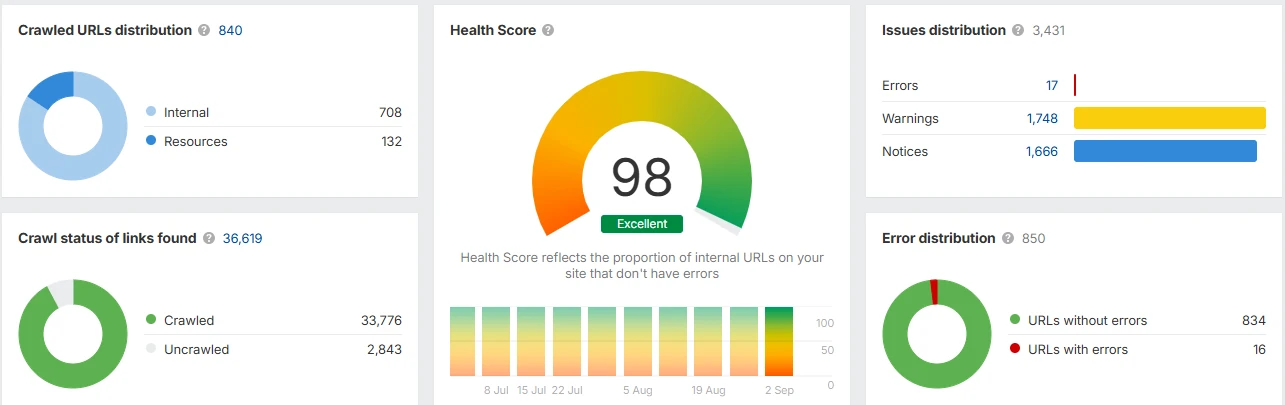
Pattern diagnosis
A crawl becomes useful when recurring causes are grouped, prioritised and connected to implementation.
Scope
The scope follows the pattern creating the problem. A migration requires different evidence from a schema or rendering issue.
Status codes, robots, XML sitemaps, canonicals, indexability and URL patterns.
Depth, hubs, navigation, contextual links and orphan-page control.
Headings, metadata, content output, duplication, rendering and responsive consistency.
Language/market architecture, reciprocal hreflang, canonicals and real localisation.
Entity and page-type markup that matches visible content and eligibility.
Inventory, URL mapping, redirects, launch QA, Search Console monitoring and issue response.
Evidence boundary
Relevance, content, authority, competition and user response still matter after the technical foundation improves.
Tools we work with
We use Ahrefs and Semrush to identify patterns, then check findings against Search Console and the website implementation. Issues are prioritised by impact and dependencies.


FAQ
Only if the findings lead to decisions and implementation. Prysma can provide implementation-ready requirements, execute agreed changes or support another development team.
No. It removes preventable barriers and improves the foundation. Relevance, content, authority, competition and user response still matter.
Before the target URLs and templates are finalised. Redirects and launch checks cannot compensate for architecture decisions made without search context.
Next step
Share the site, migration plan or Search Console context. We will determine what requires investigation first.